
If you’ve been wondering why you should learn to can, you’re not alone. Many people question whether canning is really worth the time, effort, and cost to get started — and I used to be one of them. But over the years, this simple skill has become one of the most valuable parts of my homemaking journey. From saving money to building a deeper pantry and nourishing my family with real, wholesome food, canning has proven itself again and again. What started as a small hobby has grown into a way of life, and I’m here to show you why it’s absolutely worth beginning your own canning journey with confidence.

How My Canning Journey Began
When my kiddos were little, I canned just a few specific items each year — the easy ones I knew my busy working‑mama self could manage and that my family would actually eat.
Growing up, canning was a part of our life. My brother and I were always enlisted (aka: volentold) to help — snapping green beans, peeling pears, picking berries.
So, when it came time to can for my own family, it wasn’t completely foreign to me. I knew the basics, and for everything else I had my trusty canning books… or I’d just call my mom, which is what usually happened.
When the kids were babies and toddlers, these were the three things I learned to can every single year without fail.
Why You Should Learn to Can: Stocked Pantry
Applesauce
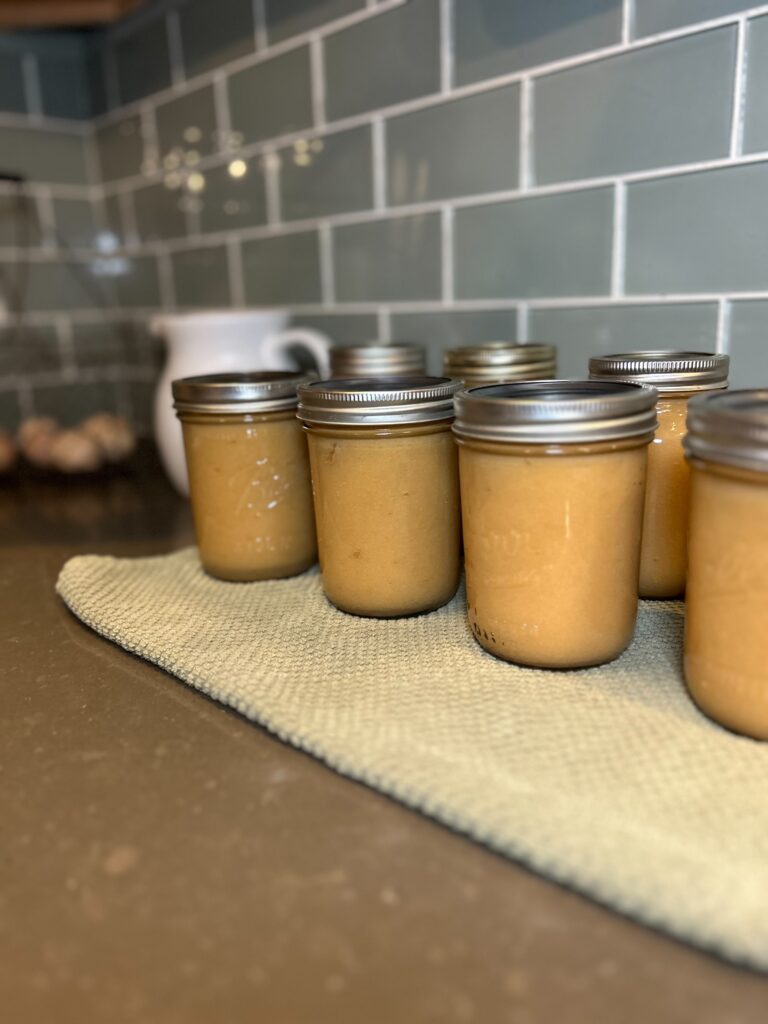
Applesauce was a daily staple in our home with babies and toddlers. It was the perfect snack, a simple side dish, and a healthier option… And when necessary, I could easily disguise meds or supplements.
When my son was little, he struggled with chronic ear infections, endless rounds of antibiotics, and constant stomach pain. At age two, the doctors put him on yet another antibiotic and told us he would need ear tubes. That moment was the catalyst that sent me down the holistic rabbit hole — the beginning of my journey into natural medicine and gut health.
I absolutely believe modern medicine has its place, but I also believe we’ve drifted too far from natural remedies that support the body before the “big guns” are needed. And sometimes, that drift creates bigger issues.
But back to canning…
Sugar was already something we used sparingly, but we also went gluten‑free and dairy‑free for a season to help heal his gut. Applesauce became the one sweet treat he loved and the perfect carrier for probiotics — no texture battles, no fuss.
However, I was shocked by how much sugar was in store-bought brands, and finding a truly unsweetened version was never a guarantee. Since I had already learned that canning applesauce was a simple process, I decided to take control of our supply. Apples were easy to source from family and friends— I made sure we were well stocked for the year.
With patience, probiotics, and some simple holistic remedies, his gut healed. We were able to reintroduce gluten and dairy, and he never had another ear infection after the doctor told us he needed the tubes.
Jams
PB&J has always been a staple lunch in our home. One kiddo ate it on homemade bread, and for a while, the other had his “sandwich” made from gluten‑free pancakes I’d saved from breakfast.
Strawberry, raspberry, blackberry — whatever unsprayed berries I could find for a good price. More often than not, it was a mixture of whatever was on sale or what we could pick, to make a full batch.
At the time, Costco had the cheapest organic jam, but they only carried strawberry… and it got old fast. Plus, Costco was a two‑hour drive away. So my jamming journey began.
Peaches
Peaches are one of those foods that are infinitely better when canned at home. My whole family agrees — they’ll only eat home‑canned peaches.
Every year I’d tuck away $10 a month from the grocery budget to save up for summer peach season.
But this year — after 16 years of marriage and kids — I didn’t have to buy a single peach. Our own trees finally produced, and they blessed us with all the fruit we could eat, can, and freeze. We preserved everything: jars of peaches, peach pie filling, dried peaches, peach jam, peach syrup, peach compote, and even peach salsa.
Why You Should Learn to Can: Body & Budget
Pressure Canning: The Skill That Changed Everything
When the kids were 3 and 5, we had just finished building our home and moved onto our property. I was learning more about natural health and the role food plays in it, and we dreamed of a small garden and a few animals to help with grocery costs.
Around that time, Joel’s sister passed down their grandma’s pressure canner.
I had never pressure canned before, and honestly, it sat on the shelf staring at me for a year because I was convinced, I’d blow up the house. Eventually, I set aside the fear and stepped out in faith.
My mom would have been the perfect teacher to learn from, but she lives in another state. So, I called Marcia — a friend’s mom who loves gardening and preserving. She happily came to my house and gave me a canning lesson, using my own canner on my own stove.
I took meticulous notes, realized it wasn’t nearly as scary as I’d imagined, and never looked back. By learning this new skill, the world of food preservation opened wide, and two pantry staples quickly became regulars in my canning rotation.
Bone Broth
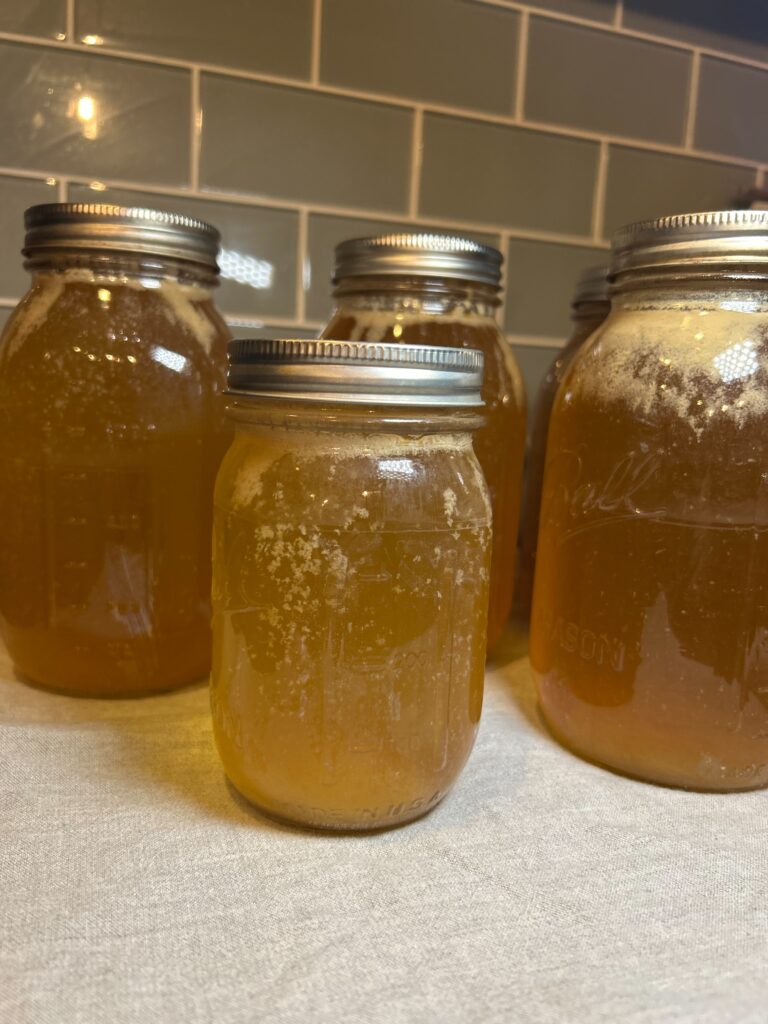
Liquid gold in a jar.
Bone broth is one of my most‑used pantry staples. It’s nutrient‑dense, mineral‑rich, gut‑soothing, and perfect for cooking. When someone is sick or needs an immune boost, I warm it with a little Redmond’s Real Salt, or use it as the base for a hearty soup.
Bone broth was the very first thing I learned to can from Marcia, and it’s something I make throughout the year.
If you’ve bought bone broth lately, you know how expensive it is — especially compared to making it at home for almost nothing.
My best tips:
- Save bones from chicken, ribs, roasts — anything. Freeze them.
- Save veggie scraps: celery ends, carrot peels, onion skins, garlic pieces, or veggies about to go bad if not used soon (I’m sure nobody ever has this happen). Freeze them.
- When the bags are full, make broth. Nothing wasted, everything used. No extra costs!
Canned Beans
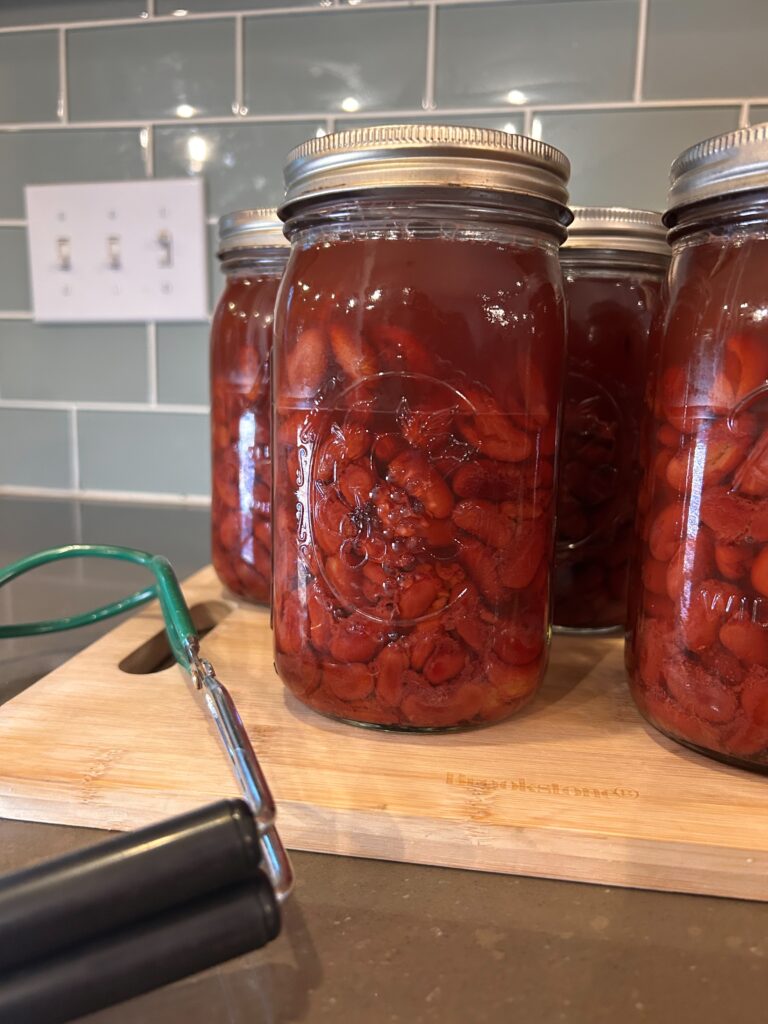
Beans are another pantry staple on repeat in our home. They’re cheap, filling, healthy, and incredibly versatile.
Having jars of ready‑to‑use beans in different sizes is a lifesaver for quick meals. I usually do a couple of canner loads every 3–4 months.
Kidney, pinto, and black beans are our favorites. At roughly $2.30 per can for organic beans, we’d easily spend $150+ a year if we bought them all.
Canning dry beans saves 50–70%, even after factoring in lids.
Azure Standard is my go‑to source for bulk items, and I often split a 25‑lb bag with a friend because — let’s be honest — 25 pounds is a lot of beans.
Why You Should Learn to Can: Food Freedom
Taking Control of the Source
I was only two seasons into my gardening journey when the world shut down in 2020. Looking back, I’m so thankful for what I’d learned in those first two years because those skills were suddenly put to the test. Overall, our routine stayed the same; we already lived a rural lifestyle, homeschooled our kids, and kept a well-stocked pantry for when winter storms blocked the roads.
However, seeing empty grocery store shelves for the first time was eye-opening. It wasn’t about the fear of going hungry; it was the realization of how dependent we were on a fragile system for our well-being. We knew right then that we wanted to extend our pantry and take back control of our ability to thrive, sooner than later.
I quickly realized that if I could grow and put up even just our daily essentials, we would be doing more than just stretching a dollar; we would be building a truly stocked pantry.
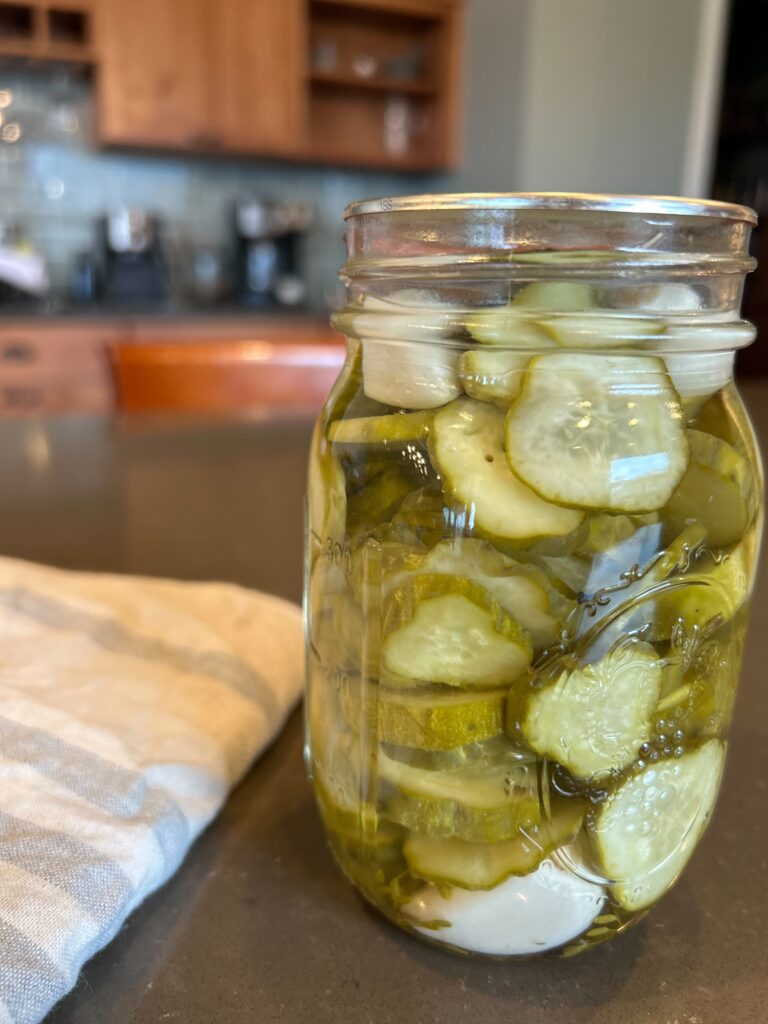

So, we expanded the garden to include everything needed for canning and storing our basic pantry staples:
- herbs
- salsa
- pickles
- hot pepper jelly
- cowboy candy
- pizza and pasta sauce
- green beans
- potatoes
- winter squash
- onion
- carrots
I wasn’t sure if everything would grow but figured I’d give it a shot. It grew. And it was a lot to keep up with, but with my kids now helping out or being ‘volentold’, it got done.
And every time I heard a jar ping, or grabbed an onion out of storage, it felt like a tiny act of rebellion—or a quiet ‘screw you’—to the current industrial food system.
Why You Should Learn to Can: Convenience
Fast‑forward 6 years in our home, and I’m still canning all the same staples. But as our life has grown busier — older kids, activities, commitments — I realized I needed to level up again.
Convenience canning became my new best friend.
Meats
Having precooked, seasoned meats on the shelf is a total game-changer for last-minute meals like tacos, Korean beef bowls, or chicken casseroles. Because the meat is already tender and shelf-stable, you can bypass hours of thawing and time spent gathering ingredients, prepping food, and hovering over the stove.
Bonus: it frees up that precious freezer space for other things and doesn’t need a generator if the power goes out.
Meals in a Jar
Ready-to-eat meals aren’t usually on the radar for beginners, but for seasoned canners, they’re the best-kept secret in the pantry. These heat-and-eat jars have saved the day more times than I can count—whether I’m scrambling for a quick family dinner or looking to bless a friend in need with a home-cooked meal.
Some favorites:
- Soups… the options are endless
- Fajitas in a jar
- Beef stew
- Venison chili
- Thai Curry
- Pot pie filling
- Stroganoff
- Baked beans
Desserts
And of course — dessert.
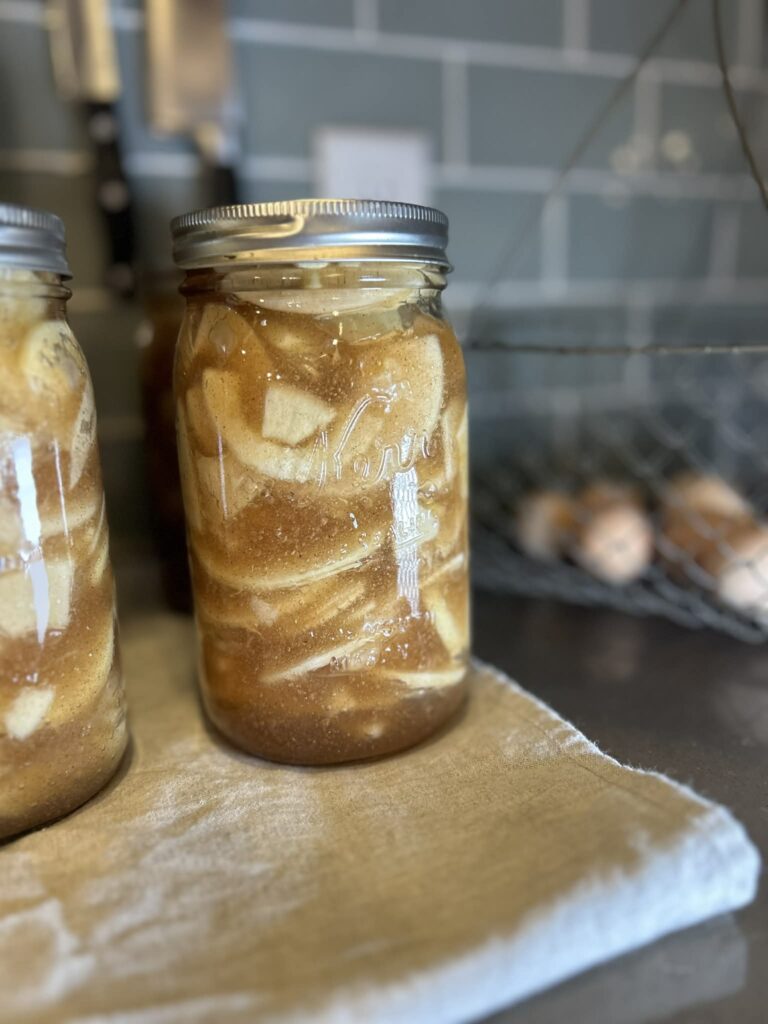
Peach and apple pie fillings are my favorite to can, and I make enough to last all year. They’re perfect for unexpected company, potlucks, holiday dinners, or simply a Wednesday night treat.
Why You Should Learn to Can: Leaving a Legacy

What started as a practical way to provide for my family and be a good steward of our finances quickly evolved into something of far greater value. It has become a source of immense pride and a strong connection to the generations of women who came before me.
The tradition was passed down through shared moments: time spent with my grandma in her kitchen, making sauerkraut and canning tomatoes; standing at the sink in our sweltering farmhouse kitchen with my mom, pear juice dripping down my elbows; and snapping beans with the family while watching a TV show, the cool evening breeze blowing through the long lace curtains.
This is a piece of history and nostalgia almost completely lost in today’s fast-paced culture—the inherent value of hard work and the satisfaction of a job well done. It is purposeful work: providing for our own well-being and knowing I possess a skill with lasting value. That true value is not merely in the preserved food itself, but in the deep sense of contentment and self-reliance it instills in my soul.
This dying skill is a legacy I am determined to pass on to my children, ensuring this rich tradition endures. I have no expectation for them to follow my exact path; they are individuals with their own unique callings. However, by giving them these tools, I am empowering them to cultivate their own heritage and serve the Lord in whatever way He leads. My hope is that they take this foundation and use it to shape a life of true meaning—creating a legacy that will one day be whispered in the kitchens of their own children.
Start Small, Stock Big: Your Invitation to Begin
Whether you’re considering learning to can for saving money, building a deeper pantry, or simply taking back a bit of control over your food, I hope my story encourages you to begin. It’s a simple way to nourish our bodies, steward our resources well, master a forgotten skill, and create a pantry that supports us through every season.
So, if you’ve been wondering whether you should learn to can, consider this your invitation to begin. Start with one simple water bath recipe like jam or applesauce and let your confidence grow from there.
Share and Encourage
If you’re a seasoned canner, what was the very first thing you preserved, and did you have those first-timer jitters too? What would be your best advice for someone who is on the fence? Tell us in the notes.
Right now I am like you were in the beginning. I can a few things but very little. I was just telling my husband this year I want to start doing a lot more like beans, bone broths, jams, ect. This gave me some encouragement to do it! I enjoyed reading this post. Do you have a recipe for sugar free jams you can?
I’m so glad you found it encouraging. Definitely start small so not to get overwhelmed… when that’s easy, add something new. The Ball canning book was always a go-to for no sugar and low sugar recipes. But in the last 3 years or so I’ve been using Pomona’s pectin with a raw cane sugar and found we really enjoy it as well. Keep me posted on your canning journey, I’d love to hear how it’s going.
your pantry is beautiful! we always can applesauce bc we eat so much of it! other years we may add in more things. this is inspiring, thank you!
These are great ideas. I make bone broth a lot, but I had no idea beans could be canned. I will try your tips.
Thanks for sharing this. Canning is on my list of things I want to start learning and doing, this is a great nudge to get started.